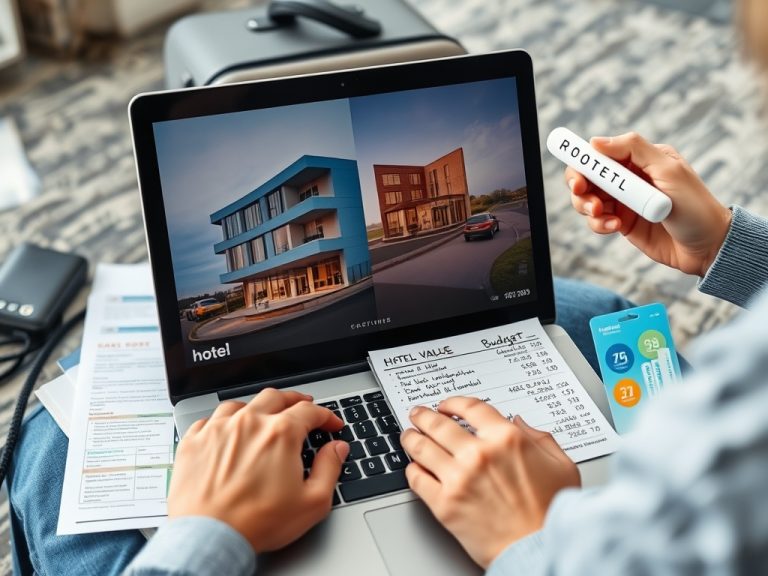
Rooms, Rates & Accommodation Selection
Room preferences are becoming more functional and purpose-specific.
TL;DR: Travelers increasingly compare sleep quality, layout, noise, streaming, climate control, work surfaces, storage, accessibility, privacy and the accuracy of room descriptions alongside size and view. The result is a shift from choosing a room by category name to choosing it by how well it supports the actual stay.
The room is being treated as a living environment
A hotel room used to be marketed through a few broad signals: bed type, square footage, view and luxury tier. Those still matter, but many guests now evaluate what they can do comfortably inside the room. Can two people get ready without blocking each other? Can a child sleep while an adult reads? Is there a real chair for work? Can luggage be opened without taking over the floor? Is the room quiet enough for recovery?
These questions are especially important for longer stays, bleisure travel and multigenerational trips. They also explain why a bigger room is not always the better room. Layout can create more usable space than raw area, and a well-placed door or partition can improve privacy more than decorative upgrades.
Sleep quality is competing with the view for attention
Hilton’s 2026 trends report emphasizes traveler interest in comfort and familiar routines, while its road-trip findings also highlight the importance of a comfortable bed. The broader lesson is that sleep is becoming a visible part of hotel choice rather than something guests only discuss after a bad night.
Travelers can look for blackout capability, bed configuration, temperature control and review patterns around noise. Hotels should be careful with claims such as ‘soundproof’ unless they can support them technically; ‘quieter location’ or a description of floor placement may be more accurate. Room assignment will always have some variability, so guests with critical sleep needs should contact the property rather than rely on a generic category description.
Streaming, charging and connectivity feel like room basics
J.D. Power’s 2025 hotel satisfaction study identifies smart-TV access as a growing guest expectation in its North American sample and treats connectivity as a core part of hotel satisfaction. For many travelers, the room now competes with the comfort and convenience of home media.
That does not require a room filled with complicated technology. Guests often prefer a stable Wi-Fi connection, intuitive streaming, accessible outlets and controls that do not require instructions. Properties should also make it easy for guests to log out of personal accounts. A low-friction room is often more satisfying than a highly automated room with fragile interfaces.
Layout matters more as travel groups become less standard
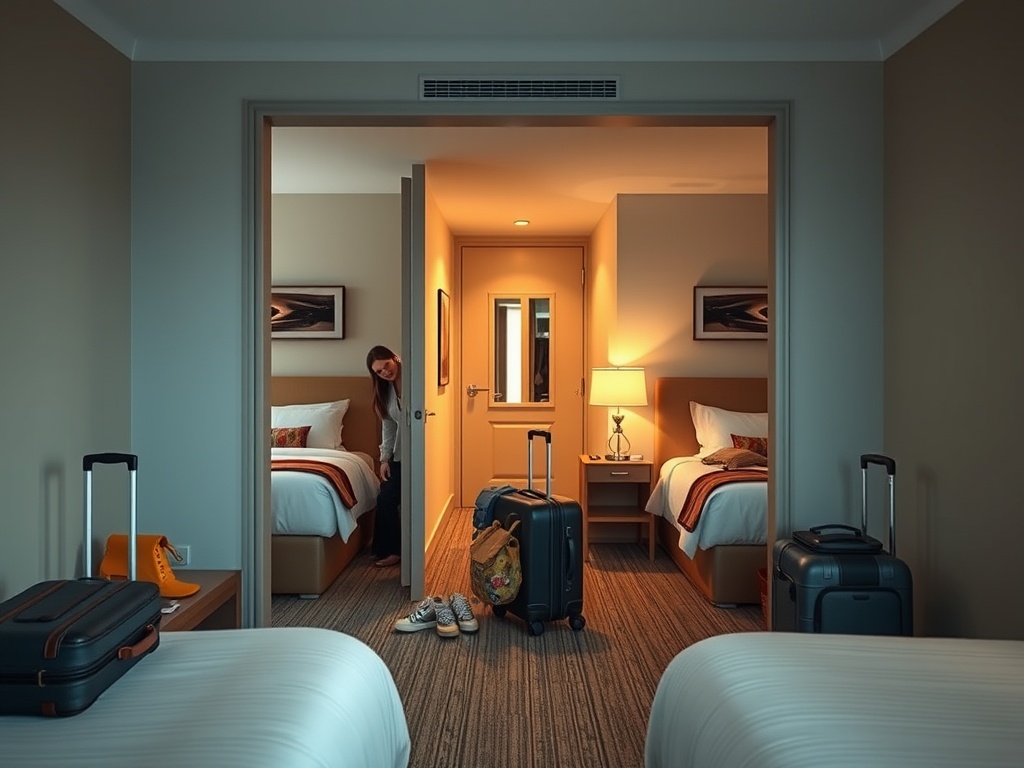
Family, friends, colleagues and multigenerational groups may need connecting rooms, split bathrooms, sofa beds, twin configurations, bunk spaces, extra storage or separate sleeping zones. The category name does not always reveal these differences, and maximum occupancy does not prove that a room will be comfortable for that many people.
This is why usable layout can contribute directly to perceived value. Our article on how travelers define value differently now explains why practical fit can matter as much as a nominal upgrade. Travelers should verify whether a connecting-room request is guaranteed or merely requested, because that distinction can materially affect a family or group booking.
Work surfaces and decompression space are sharing the same square footage
Corporate travelers may still need a desk, but remote and hybrid work have broadened the use case. A leisure traveler may take one call before heading out; a parent may need a laptop surface after children are asleep. Hotels can support this with proper lighting, a usable chair, accessible power and a small amount of visual separation from the bed.
At the same time, not every guest wants a room that feels like an office. Flexible furniture and multipurpose surfaces can work better than oversized fixed desks in some segments. The trend is toward adaptability: a room that can shift between work, rest and personal time without making any one mode uncomfortable.
View categories need clearer definitions
A room’s view can carry a large price premium, yet labels such as ocean view, sea view, partial view, resort view or skyline view are not standardized globally. Travelers should look for property-specific definitions and room photos, then decide whether the view is central to the trip or simply desirable.
Hotels can reduce disappointment by using accurate room-category photography and by avoiding angles that imply a more open view than most rooms provide. Review photos can add context, but room assignments vary and individual guest images may not represent the booked category. Accuracy is more important than making every room appear aspirational.
Accessibility and control are becoming mainstream room questions
Accessible room design is essential for travelers with disabilities, but features such as step-free showers, clear circulation, reachable controls and thoughtful lighting can improve usability for many guests. Properties should publish verified accessibility details and provide a reliable contact path for needs that must be confirmed.
Control also includes housekeeping timing, minibar use, temperature, lighting and privacy. Some guests want daily service; others want minimal interruption. The most guest-centered approach is to offer understandable choices where operations allow, rather than assuming one service pattern fits everyone.
What room selection may look like through 2028
Over the next 12 to 24 months, room shopping may become more visual and attribute-based, with travelers filtering for specific layouts, connected rooms, streaming, accessibility features and work setups rather than relying on broad category names. AI may help interpret room options, but accurate structured property data will be the foundation.
This also connects with changing hotel booking habits. As travelers compare across more channels, inconsistencies in room names and inclusions will become more obvious. Hotels that standardize descriptions and show the differences clearly may reduce abandoned bookings and post-arrival disputes.
Room photos should answer practical questions
Good room photography can reduce uncertainty when it shows scale and function rather than only a styled corner. Travelers benefit from seeing the bed in relation to the desk, the width of circulation space, the bathroom entrance, storage, balcony depth and the actual view direction. Properties can also label photographs by room category so guests do not assume a hero image represents every unit. When a feature is guaranteed only in some rooms, the description should say so. This level of visual accuracy may become more valuable as booking tools increasingly compare room attributes automatically and guests arrive with more specific expectations about layout.
Choose the room by the hardest hour of your stay
Think about the moment when the room will be most demanding: everyone getting ready, a late work call, a child sleeping, recovery after a long flight or an early departure. Then select the layout and features that make that moment easier. That method is often more useful than simply upgrading to the next category.