
Choose streaming classes when a live schedule, instructor presence, and group energy improve follow-through. Choose on-demand programs when flexibility, repeatability, and control over pacing matter more. The better format is the one whose coaching, progression, safety options, and cost fit your actual week.
KEY TAKEAWAY: Compare the service as a training system, not a video library. Check instruction quality, program progression, modification options, equipment needs, cancellation terms, and how often you will realistically use it.
Clarify What “Streaming” Means
Live-streamed classes happen at a scheduled time and may allow chat, feedback, or community interaction. On-demand libraries can be played whenever convenient. Some subscriptions combine both, while others sell a fixed multiweek program without live contact. The label alone does not reveal whether sessions form a coherent progression or are simply a collection of unrelated workouts.
Write down the main goal before comparing platforms: general activity, strength, mobility, indoor cardio, sport preparation, or stress management. A service built around dance cardio may be engaging but unsuitable for a structured strength goal. A detailed lifting program may be unnecessary for someone who mainly wants three short movement breaks per week.
When Live Classes Create Useful Structure
Live classes reduce choice at the moment of action. The calendar says when to start, the instructor controls pacing, and familiar participants can add social accountability. This works well for people who repeatedly postpone flexible workouts or enjoy shared effort. A scheduled class can also create a clear boundary around work and home responsibilities.
The tradeoff is rigidity. Time-zone differences, unpredictable work, caregiving, or limited space can turn a helpful schedule into friction. Live feedback may also be limited because one instructor cannot closely observe every participant through a small camera. Do not assume “live” equals individualized coaching.
When On-Demand Access Wins
On-demand programs let users pause, replay technique, select shorter sessions, and train when energy and space allow. Repetition can improve learning: performing the same session for several weeks makes progress easier to judge than choosing a new class every day. Libraries also make it easier to substitute a low-impact or beginner session when needed.
Choice can become the weakness. A large catalog may encourage browsing instead of training, or random workouts that never progress. Look for a calendar, clear levels, and instructions for increasing load or difficulty. The article comparing stair climbers, ellipticals, and bikes uses the same principle: start with the goal, then choose the tool.
Evaluate Coaching and Safety Signals
Watch a sample class before paying. Good instruction explains setup, demonstrates the movement from a useful angle, provides modifications, and states when to stop. It distinguishes normal effort from concerning symptoms and does not promise guaranteed weight loss, injury prevention, or hormone changes. Instructor credentials should match the topic, especially for prenatal, post-rehabilitation, chronic-condition, or older-adult programming.
A video cannot assess an injury or confirm that a movement is appropriate for a specific condition. People returning after surgery, managing unstable symptoms, or experiencing chest pain, faintness, or unusual shortness of breath need individualized medical guidance.
Check Whether the Program Actually Progresses
A coherent plan should answer four questions:
- What should a beginner do in week one?
- How do exercise difficulty, repetitions, load, or duration change?
- What happens when a session is missed?
- How can a user move down or up a level safely?
If every class is marketed as a total-body challenge but no progression exists, the subscription may provide entertainment rather than a program. Entertainment can still support activity, but the buyer should know what is being purchased.
For strength goals, check whether the workouts allow enough resistance and rest. The guide to building muscle after 40 explains why stable exercises and measured overload matter more than constant novelty.
Audit Equipment, Space, and Technology
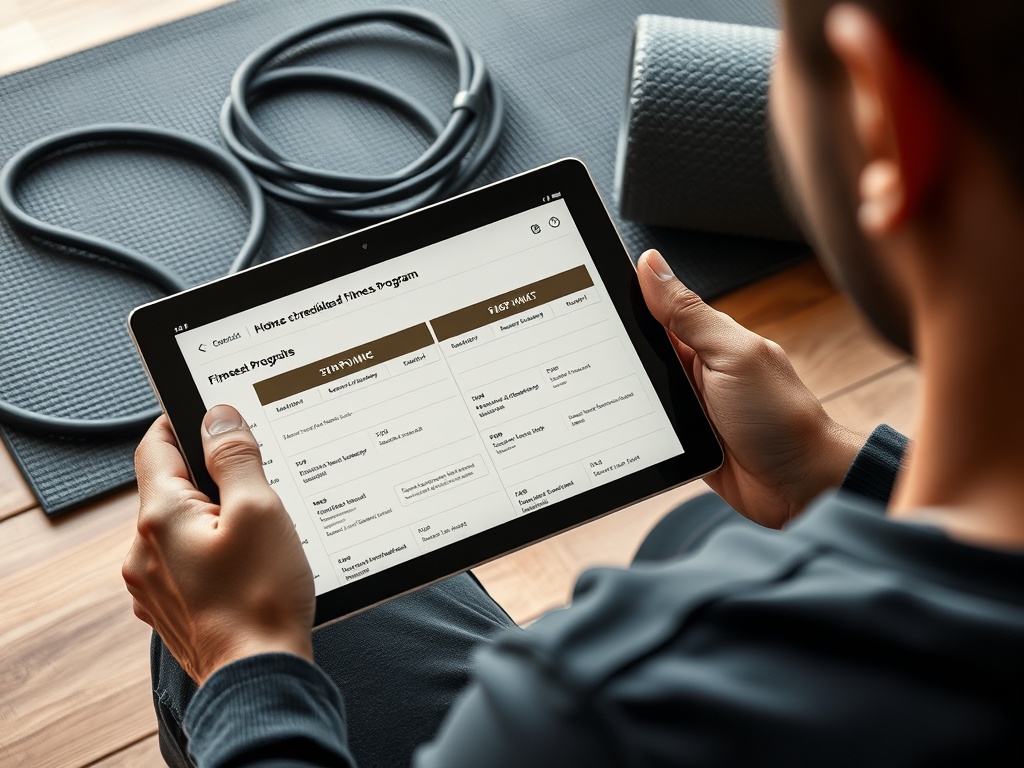
List required equipment across the full program, not just the free sample. Include adjustable weights, bands, bench, mat, bike, step, or heart-rate device. Measure the available floor area and check ceiling height for overhead movements. Confirm whether the service works on your preferred phone, tablet, television, or browser and whether videos can be downloaded for travel.
Also test practical details: caption quality, audio clarity, camera angles, music controls, playback speed, and whether modifications are easy to find. Accessibility features can determine whether a program is usable, not merely convenient.
Consider Community and Instructor Access
Some services include private groups, office hours, or form-review options. Check who moderates the community, how quickly questions are answered, and whether feedback comes from qualified staff or other subscribers. Community can improve accountability, but it should not become a source of medical advice, body comparison, or pressure to ignore pain. Decide whether you want social contact before paying for features you may never use.
Calculate Cost per Used Session
Monthly price is incomplete. Add equipment, premium tiers, required device access, and cancellation terms. Then estimate how many sessions you will actually complete. A higher-priced live service used three times weekly may cost less per completed workout than a cheap library opened twice.
The FTC’s guidance on free trials and auto-renewing subscriptions recommends reading trial length, charges, and cancellation terms before enrolling. Save the confirmation, set a calendar reminder, and confirm cancellation instructions while the decision is still calm.
Use a Two-Week Trial Scorecard
During a trial, record five items after each session: start friction, coaching clarity, physical appropriateness, enjoyment, and likelihood of repeating it. Also note technical problems and any equipment substitutions. After two weeks, ask whether the service made exercise more consistent and whether the sessions connect to the stated goal.
Do not use soreness as proof of quality. The fitness-myth guide explains why pain, sweat, and exhaustion are poor stand-alone measures. Progress may instead appear as better technique, more repetitions at the same effort, longer comfortable sessions, or improved adherence.
Watch for Marketing Red Flags
Avoid programs that promise rapid transformation for everyone, shame users for modifications, prescribe severe dieting without qualified oversight, or suggest pain should be ignored. Be cautious when testimonials replace program details. A dramatic individual result cannot tell you the typical outcome or whether the person followed additional training and nutrition strategies.
Privacy also matters. Review what the app collects, whether camera access is required, and how health or payment information is handled. Use a unique password and limit permissions that are not needed for the service.
Run a Two-Week Reality Check
Choose one live option and one on-demand option with transparent trials or sample classes. Test each against the same goal and scorecard, then select the format you started most reliably and can afford to continue. If neither provides appropriate progression or instruction, a written plan, local class, or qualified coach may be a better fit. The right subscription is not the one with the largest library; it is the one that turns available time into safe, repeatable training.