Grow lights supplement or replace weak indoor sunlight so houseplants can photosynthesize, hold compact growth, and support new leaves or flowers. The right setup depends less on the word “grow” on the package and more on light intensity, spectrum, distance, and the number of hours the plant receives light each day.
TL;DR: For most houseplants, a full-spectrum LED is the simplest starting point. Match the fixture to the plant’s light needs, position it close enough to be useful without causing heat or bleaching, use a timer, and adjust based on plant response rather than relying on wattage alone.
What a grow light actually does
Plants use light energy for photosynthesis, so an indoor plant placed far from a bright window may receive too little usable light even when the room looks comfortable to human eyes. The University of Minnesota Extension’s indoor plant lighting guide explains that insufficient light can lead to pale foliage, stretched stems, wider gaps between leaves, leaf drop, and weak flowering.
A grow light is simply an artificial light source chosen and positioned to provide plant-usable light. It can serve as a supplement beside a window, a primary source for a dark room, or a controlled source for seedlings and propagation shelves. The fixture does not automatically make a plant thrive; watering, temperature, nutrition, root health, and species-specific needs still matter.
Four terms worth understanding
Intensity describes how much light reaches the plant. A powerful fixture hung too far away can be less useful than a modest fixture positioned correctly.
Spectrum describes the wavelengths or colors emitted. Red and blue wavelengths are important to photosynthesis, while balanced white or full-spectrum fixtures are practical for most home situations because they support plants while keeping the room visually comfortable.
Photoperiod means the hours of light in a 24-hour cycle. Plants need adequate light, but many also benefit from a regular dark period.
Distance affects intensity and heat exposure. Light drops as the fixture moves farther from the leaves, so placement is often the first variable to adjust when plants stretch toward the lamp.
LED vs fluorescent lights for houseplants
For many homeowners, LEDs are the most convenient option because they are energy efficient, long lasting, available in many shapes, and generally produce less radiant heat than older incandescent systems. Fluorescent fixtures can still work well, especially for shelves or propagation areas, and they may have a lower purchase cost.
Incandescent bulbs are usually a poor choice for serious plant lighting because they waste more energy as heat and provide a less useful balance of light for compact growth. High-intensity commercial fixtures can be effective, but they are often unnecessary for a typical living room or small indoor collection.
A practical buying approach is to look for a fixture that provides a usable coverage area, clear hanging-distance guidance, and a balanced spectrum rather than choosing solely by advertised wattage. If the manufacturer provides photosynthetic photon flux or a coverage chart, those measurements can be more informative than a generic “equivalent watt” claim.
Match the light to the plant rather than the room
A snake plant or ZZ plant can tolerate substantially less light than a citrus plant, many herbs, or flowering species. Start by identifying whether your plant prefers low, medium, or high light. Then decide whether natural daylight already covers part of that requirement.
A north-facing room may need supplemental lighting for much of the year, while a bright south-facing window may need little assistance for foliage plants. Seasonal changes matter too. Winter sun angles, shorter days, overhangs, nearby buildings, and tree canopies can change the amount of light that actually reaches leaves.
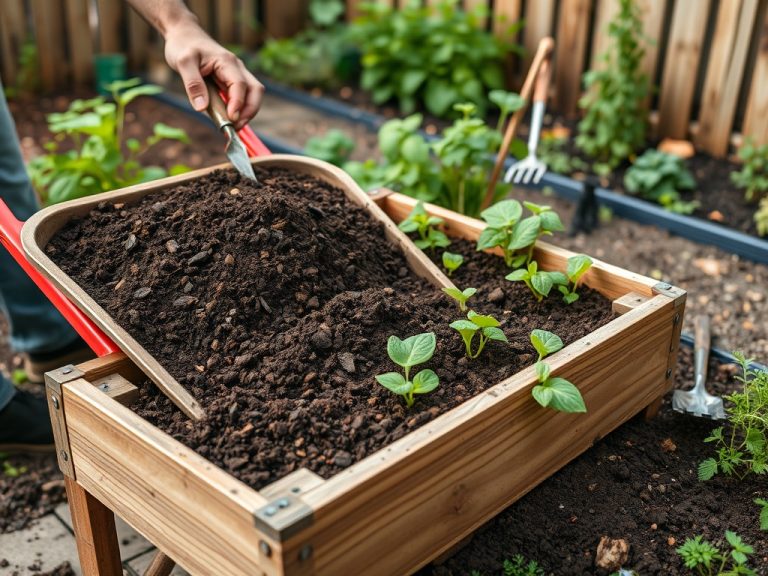
When you are building a broader gardening routine, remember that light and root conditions work together. The same habit of matching conditions to plant needs applies outdoors when choosing a raised bed soil recipe for edible gardens or deciding how to improve drainage around garden beds.
Set up the fixture in five practical steps
- Identify the plant’s light category. Use a reliable horticultural source or the plant’s cultural requirements rather than guessing from leaf color alone.
- Choose a fixture that covers the canopy. A narrow spotlight may illuminate one stem while leaving the rest of a wide plant in shade.
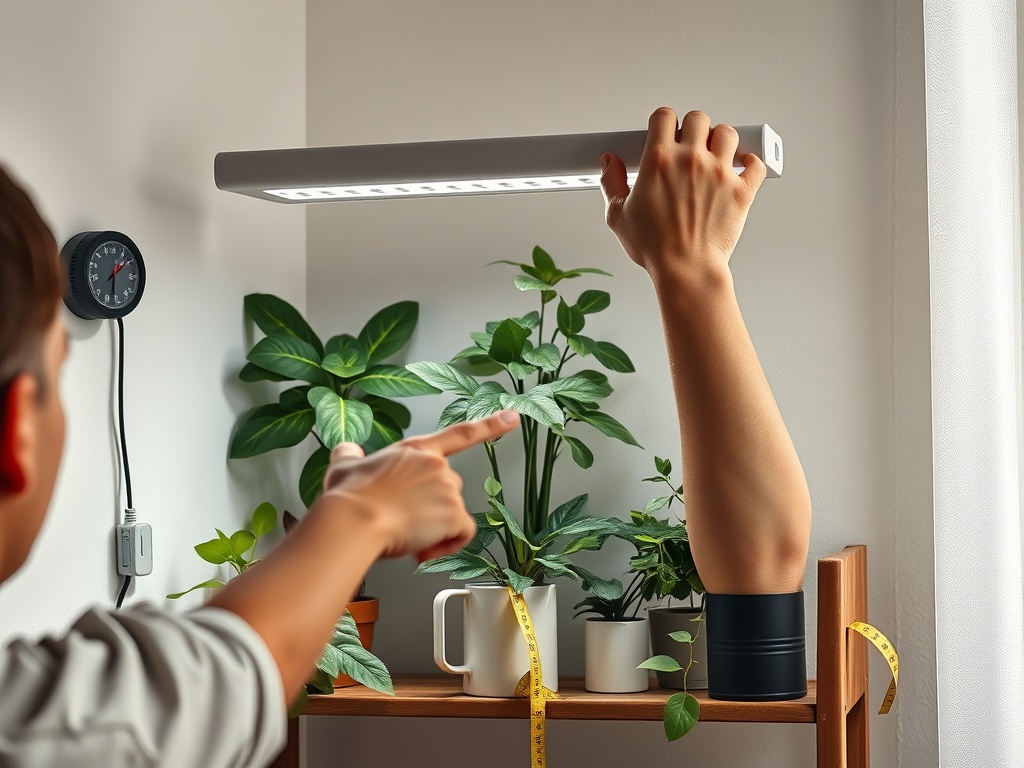
- Start at a conservative distance. Follow the fixture manufacturer’s recommendations, then watch the plant. The University of Minnesota notes that distance should be adjusted by plant type and light source rather than treated as one universal number.
- Use a timer. Consistency is easier for both plants and people when lighting turns on and off automatically.
- Reassess after new growth appears. New leaves provide better feedback than old damage. Compact growth generally suggests the plant is receiving more appropriate light than a plant that keeps stretching.
The Extension’s seed-starting guidance also emphasizes that seedlings need strong, close lighting and a daily dark period. Seedlings are more demanding than many established foliage houseplants, so avoid copying a seed-starting schedule blindly for every indoor plant.
Signs the setup needs adjustment
The plant is stretching or leaning
Long internodes, smaller leaves, and strong leaning toward the fixture can indicate insufficient light or uneven coverage. Move the light slightly closer if the fixture allows it, increase coverage, or rotate the plant periodically.
Leaves look bleached or scorched
Too much intensity, excessive heat, or a sudden move from dim conditions to strong light can damage foliage. Increase the distance, reduce duration, or acclimate the plant gradually.
Soil stays wet much longer than expected
Plants in low light typically use water more slowly. If a grow light increases active growth, watering frequency may change, but the correct response is still to check the potting mix rather than water on a rigid calendar.
Growth improves on only one side
The fixture may be too narrow or off-center. Raise it slightly for broader coverage if intensity remains adequate, or add a second light for a wide group of plants.
Common grow-light myths
“Any bright household bulb works the same.” A household lamp may help, but output, spectrum, direction, and distance determine how useful it is to a plant. A suitable LED can work even if it is not marketed with dramatic purple light.
“Purple light is always better.” Red-and-blue fixtures can be efficient for plant production, but balanced white fixtures can also provide useful plant wavelengths and are often easier to live with in a home.
“A grow light fixes every weak plant.” Root rot, pests, nutrient problems, temperature stress, and compacted potting mix can produce symptoms that resemble poor lighting. Diagnose the whole growing environment.
“Lights should run 24 hours.” Continuous lighting is unnecessary for most houseplants and ignores the role of dark periods in normal plant physiology.
Build a repeatable indoor-lighting routine
The most dependable grow-light setup is not necessarily the strongest or most expensive one. It is the setup you can measure, repeat, and adjust as the plant grows. Start with a balanced LED, a timer, and a sensible distance, then let new growth guide refinements.
For gardeners who also manage outdoor beds, comparing leaf mold and compost can help extend the same condition-first thinking from indoor light management to soil structure and organic matter outdoors.
Home and garden information is provided for general educational purposes. Plant responses vary by species, environment, fixture design, and growing conditions; follow product instructions and consult a qualified horticulture professional when a plant problem is persistent or difficult to diagnose.[/