A productive raised bed needs a stable, well-drained mineral soil base plus organic matter, not a container filled with pure compost. The best “recipe” is therefore a framework: use quality topsoil or garden soil as the main body, blend in mature compost in a moderate proportion, then adjust texture and fertility according to a soil test and the crops you plan to grow.
TL;DR: Build raised-bed soil around real soil, add finished compost for organic matter, avoid filling the bed entirely with compost or fluffy potting mix, check drainage before planting, and use a soil test to guide fertilizer and pH corrections instead of guessing.
Why raised-bed soil is different from potting mix
Raised beds are large soil systems connected to outdoor weather, roots, microbes, and seasonal rainfall. They need enough mineral content to hold nutrients and moisture, enough pore space to drain, and enough organic matter to support structure and biological activity.
Potting mix is designed primarily for containers. It is often based on peat, coir, bark, perlite, or similar lightweight ingredients and may settle or dry differently when used as the bulk fill for a large bed. Bagged “garden soil” and topsoil products can also vary widely, so labels and local supplier specifications matter.
The University of Minnesota Extension recommends improving garden soil with compost but also warns that excessive compost and manure can create nutrient problems. That is one reason a raised-bed formula should not treat compost as harmless filler.
A practical raised-bed soil framework
For most edible beds, think in functional parts rather than an exact universal ratio:
- Mineral soil or quality topsoil provides body, nutrient-holding capacity, and long-term structure.
- Finished compost contributes stable organic matter, microbial activity, and some nutrients.
- Texture amendments are used only when the base material truly needs them. Coarse mineral or organic components may improve aeration in certain mixes, but adding random materials without understanding the existing soil can make drainage or water retention worse.
- Fertilizer or lime should be added according to a soil test and crop needs, not automatically because the bed is new.
A common homeowner mistake is looking for a single bagged ratio that will suit every climate and every source of topsoil. Local soil texture, compost quality, bed depth, rainfall, irrigation, and crop choice all influence the best blend.
Build the bed step by step
1. Confirm drainage before filling
Water must be able to leave the bed. Avoid placing an enclosed wooden or metal bed where water has nowhere to go. If the site itself stays soggy after rain, solve the site problem first or review methods to improve drainage around garden beds.
2. Use mineral soil as the foundation
Choose a loamy topsoil or garden soil with enough mineral content to resist rapid settling. Extremely sandy soil can drain too quickly, while heavy clay may compact and drain slowly. A blend is often easier to manage than either extreme.
3. Add mature compost in moderation
Finished compost can improve structure and water behavior. The University of Minnesota’s healthy garden soil guidance describes incorporating modest depths of compost into garden soil rather than replacing the soil with compost.
If you make your own compost, use only material that has finished decomposing and smells earthy rather than sour or ammonia-like. If you purchase compost, ask about source materials and testing when available.
4. Mix rather than layer
Distinct layers of radically different textures can affect how water moves through the bed. Blend the materials through the main root zone instead of creating a “drainage layer” of gravel at the bottom and fine soil above it. A raised bed already gains drainage from elevation when the underlying site can receive water.
5. Settle the mix gently
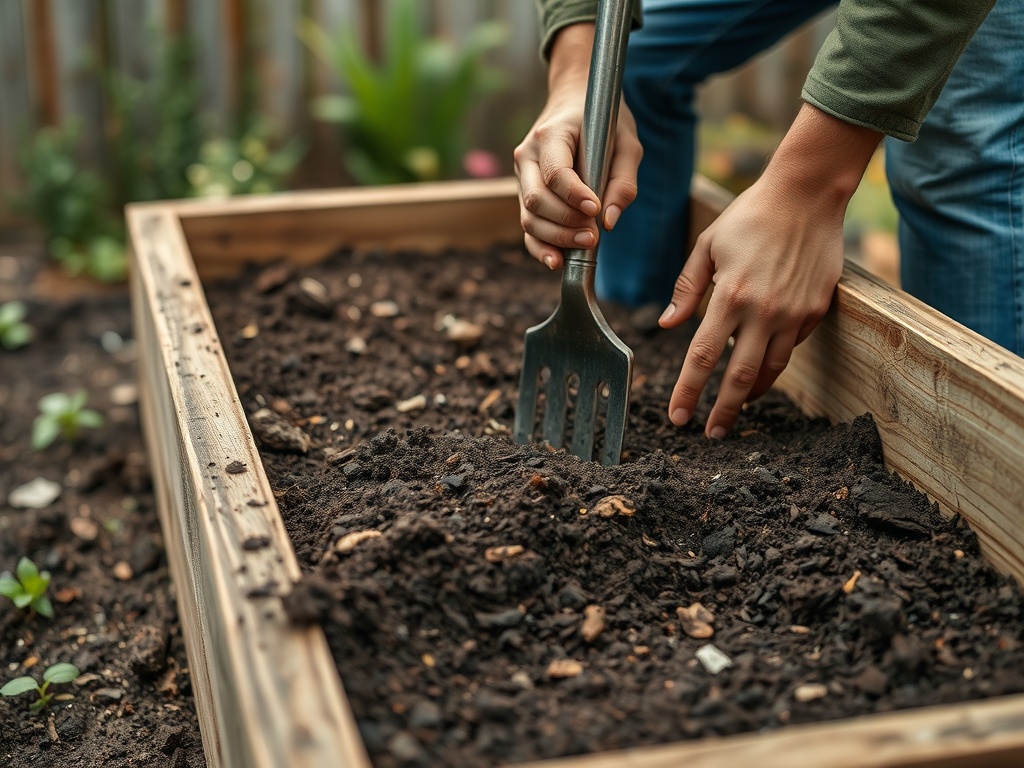
Water the filled bed and let the material settle naturally. Avoid stomping or heavily compacting the soil. Top up low areas after settling rather than pressing everything down to force more material into the box.
How much compost is enough?
There is no universally correct percentage because composts differ. Some are relatively low in nutrients and function mainly as organic matter; others, especially manure-based composts, may contribute substantial phosphorus, potassium, or salts.
If you are renovating an existing bed, a thin annual surface application may be more appropriate than repeatedly mixing large amounts into the soil. Over time, regular heavy compost applications can push nutrient levels well above what vegetables need. A soil test is the simplest way to find out whether the bed needs more nutrients or just better physical management.
This distinction becomes especially useful if you are comparing leaf mold versus compost. Leaf mold is generally valued more for structure and moisture management, while compost can carry more plant nutrients depending on its ingredients.
Adjust the mix for common soil problems
If the bed dries too quickly
First check irrigation coverage and mulch before adding more amendments. Sandy mixes and shallow beds lose water faster. Organic matter can improve water retention, but excessively fine organic material can also shrink as it decomposes.
If the bed stays wet
Look for compacted fill, blocked drainage, a low site, or a dense underlying layer. Adding more compost is not always the answer. If water cannot leave the bed, correct the physical drainage route.
If the soil crusts or compacts
Keep foot traffic out of the planting area. Beds narrow enough to reach from the sides are easier to maintain without stepping on the soil. Surface mulch can protect soil aggregates from pounding rain and reduce moisture loss.
If growth is weak despite good watering
Test the soil. Nutrient deficiency, high pH, excessive nutrients, salt accumulation, disease, or root-zone problems can all limit growth. The Extension’s advice for vegetable crops repeatedly emphasizes soil testing and matching fertilizer applications to test recommendations rather than assuming more fertilizer will help.
What not to put in an edible raised bed
Avoid fresh manure immediately before planting edible crops, unknown construction fill, chemically treated wood waste, painted lumber chips, or compost that is still hot and actively decomposing. Do not use “weed and feed” lawn products in vegetable beds because they may contain herbicides unsuitable for edible crops.
Also be cautious with elaborate filler layers such as logs, branches, cardboard, and mixed yard debris when the goal is a predictable vegetable bed. These materials can decompose unevenly, settle substantially, and alter nitrogen availability or water movement. They may be useful in specific systems, but they are not required for a successful raised bed.
Make the recipe fit the bed
A raised-bed soil recipe works best when it is treated as a starting framework, not a rigid formula. Use real soil for stability, mature compost for organic matter, testing for fertility decisions, and site-specific drainage management. Those choices give edible crops a root zone that can hold moisture without staying saturated and supply nutrients without unnecessary excess.
If you also grow seedlings indoors before transplanting, the guide to grow lights for indoor plant success can help you manage the earlier stage of the same edible-garden cycle.
Home and garden information is provided for general educational purposes and does not replace site-specific horticultural, structural, or soil-testing advice. Soil products, compost composition, local climate, and crop requirements vary; follow local extension guidance and product labels where applicable.[/