Leaf mold and compost both improve garden soil, but they are made differently and usually serve different priorities. Leaf mold is mainly decomposed leaves and is especially useful for soil structure, moisture management, and mulch, while finished compost is made from a balanced mix of materials and generally contributes more plant nutrients as well as organic matter.
TL;DR: Choose leaf mold when your main goal is a gentle, low-nutrient soil conditioner or moisture-holding mulch. Choose mature compost when you want broader organic matter plus a more meaningful nutrient contribution. In many gardens, the strongest approach is not either-or: use each where its properties fit the job.
The basic difference
Leaf mold is the dark, crumbly material produced as fallen leaves break down, largely through fungal activity in a moist, airy pile. It can take many months or longer to mature, depending on leaf size, moisture, temperature, shredding, and whether the pile is turned.
Compost is produced from a broader mixture of carbon-rich and nitrogen-rich materials such as dry leaves, plant trimmings, grass clippings, and suitable kitchen scraps. With the right moisture and aeration, microbial decomposition converts those materials into a stable amendment.
Penn State Extension describes leaf mold as a valuable soil amendment that can improve soil structure and water retention even though it is not especially nutrient-rich. The University of Minnesota Extension’s home composting guidance explains that compost can improve both sandy and heavy soils while contributing organic matter.
Leaf mold at a glance
Where leaf mold fits best
- Improving moisture retention in light soils
- Adding organic matter without a heavy nutrient load
- Mulching around established plants
- Creating a softer, more moisture-retentive component for certain homemade growing mixes
- Recycling large quantities of autumn leaves with minimal ingredients
Leaf mold strengths
Leaf mold is simple. If you have a steady supply of deciduous leaves, you can make it with little more than moisture, containment, and time. Because it is predominantly leaf material, it is often gentler nutritionally than rich compost.
Its texture can help improve aggregation and water behavior in garden soil. It also turns a seasonal waste stream into a useful landscape material instead of sending leaves away from the property.
Leaf mold trade-offs
Leaf mold is slow compared with a well-managed hot compost pile. It is not a complete fertilizer and should not be expected to supply all the nutrients that hungry vegetable crops need. Some leaves also decompose more slowly than others, especially when they are thick, waxy, or left whole.
Compost at a glance
Where compost fits best
- Adding stable organic matter to vegetable and ornamental beds
- Improving the structure of sandy or heavy soils
- Recycling a mixed stream of garden and kitchen materials
- Supplying some nutrients when the finished compost contains them in useful amounts
- Top-dressing beds when soil tests and site conditions support it
Compost strengths
Compost combines multiple feedstocks, so it can return a broader range of nutrients and organic compounds to the soil. Properly finished compost has a dark, earthy character and can be incorporated into soil or used as a surface amendment.
It is also versatile. Gardeners can use it when establishing beds, refreshing existing soil, or adding organic matter around plants. If you are preparing edible beds, the guide to a raised bed soil recipe for edible gardens explains why compost works best as part of a mineral-soil system rather than as the entire fill.
Compost trade-offs
Compost quality varies widely. Feedstocks, maturity, salt content, nutrient levels, weed seeds, persistent herbicide residues, and contaminants can differ between products. Manure-based composts may carry more nutrients than yard-waste composts.
More is not always better. Repeated heavy applications can push soil nutrient levels higher than plants need. A soil test is especially useful in intensively managed vegetable beds that receive compost every year.
Leaf mold vs compost side by side
| Factor | Leaf Mold | Compost |
|---|---|---|
| Main ingredients | Mostly fallen leaves | Mixed carbon- and nitrogen-rich organic materials |
| Typical nutrient contribution | Generally low | Variable but often higher |
| Main soil benefit | Structure and moisture management | Organic matter plus variable nutrients |
| Production style | Slow fungal-dominant decomposition | More active mixed microbial decomposition |
| Management | Can be low effort | Usually needs more balance of materials, moisture, and aeration |
| Best use | Conditioner, mulch, moisture support | Soil amendment, top-dressing, fertility support when appropriate |
| Main caution | Slow to mature | Can be overapplied or poorly finished |
The table is a practical generalization rather than a laboratory specification. The actual nutrient content of either material depends on the feedstocks and decomposition process.
Which is better for clay soil?
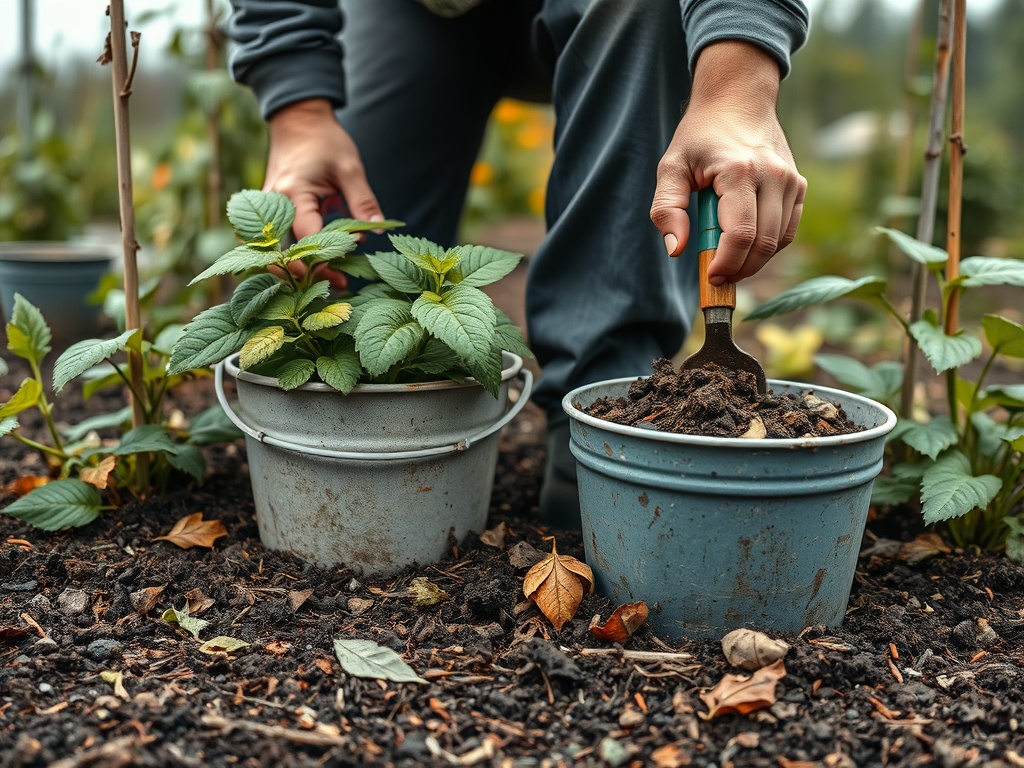
Both can help, but the best choice depends on the specific clay soil and what it lacks. Organic matter can improve aggregation and pore space in heavy soil, making it easier for roots, air, and water to move through the root zone.
Compost is often chosen because it improves structure and may also contribute nutrients. Leaf mold can also be useful when the goal is to build organic matter gently and improve moisture behavior without adding a large nutrient load.
If the bed stays saturated after rain, however, no amendment can substitute for fixing a serious drainage or grading issue. Review the steps to improve drainage around garden beds before repeatedly mixing organic material into a chronically wet site.
Which is better for sandy soil?
Sandy soil drains quickly and often holds fewer nutrients and less water than loam. Both amendments can increase organic matter, but their strengths differ.
Leaf mold is especially attractive where moisture retention is the main goal. Compost can also improve water-holding capacity while adding nutrients. In an edible bed, that nutrient contribution may be useful, but it should still be guided by plant needs and soil testing.
A surface mulch can also reduce evaporation and protect soil from pounding rain. Leaf mold can work well in that role once it is sufficiently decomposed that it will not blow around easily.
Which is better for vegetables?
Finished compost is usually the more direct choice when vegetable soil needs organic matter and nutrients. Even then, it should be incorporated or top-dressed in reasonable amounts rather than used as the sole growing medium.
Leaf mold can complement compost by improving texture and moisture management without repeatedly adding the same nutrient load. This can be useful in beds that already test high for phosphorus or other nutrients.
For seedlings grown under artificial light before transplanting, soil and light management are separate but connected parts of plant health. The guide to grow lights for indoor plant success covers the lighting side of that process.
A quick decision framework
Choose leaf mold if:
- You have lots of leaves and time.
- Soil moisture management is a major goal.
- You want a low-nutrient organic amendment.
- You need a soft mulch around established beds.
Choose compost if:
- You want to recycle mixed garden and kitchen materials.
- Soil needs both organic matter and some nutrient contribution.
- You are preparing or maintaining productive vegetable beds.
- You can verify that the material is mature and suitable for the intended use.
Use both if you want compost to support fertility and leaf mold to support structure and moisture without continually increasing nutrient inputs.
Use the material that solves the actual soil problem
The leaf mold vs compost choice becomes much easier when you stop asking which material is “better” in general. Leaf mold excels as a gentle conditioner and moisture-supporting amendment; compost is broader and often more nutrient-rich. Soil tests, drainage, crop needs, and available materials should drive the decision.
This home and garden content is for informational and educational purposes only and does not replace professional horticultural, soil-testing, environmental, or pest-management advice. Compost and leaf materials vary by source, and local rules may affect collection, processing, and use.[/