Neem oil and insecticidal soap are both commonly used for soft-bodied garden pests, but they work differently and are not interchangeable. Insecticidal soap acts mainly through direct contact and has little residual effect, while neem products may contain oil that smothers pests and, depending on the formulation, compounds such as azadirachtin that affect feeding or insect development.
TL;DR: Use insecticidal soap when you can thoroughly contact susceptible soft-bodied pests and want a short-residual treatment. Consider a labeled neem product when its listed pests and use pattern fit the problem. With either option, identify the pest first, spray only according to the product label, protect pollinators and beneficial insects, and test sensitive plants before broad treatment.
Start with the label, not the ingredient name
“Neem oil” can describe products with different active components and concentrations. The National Pesticide Information Center’s neem oil fact sheet explains that neem seed contains multiple components and that azadirachtin is one of the best-known active compounds. Some products contain clarified hydrophobic extract of neem oil, while others use azadirachtin-focused formulations.
Insecticidal soaps are typically based on potassium salts of fatty acids formulated for pest control. They are not the same as dishwashing detergent. Colorado State University Extension’s insecticidal soap guidance specifically cautions against treating household soaps as equivalent pesticide products because detergents and other additives can injure plants and are not formulated or tested the same way.
The product label tells you which plants and pests the formulation is intended for, how to mix or apply it, what protective measures are required, and how frequently it may be used. In the United States, pesticide labels are legally enforceable use directions.
How insecticidal soap works
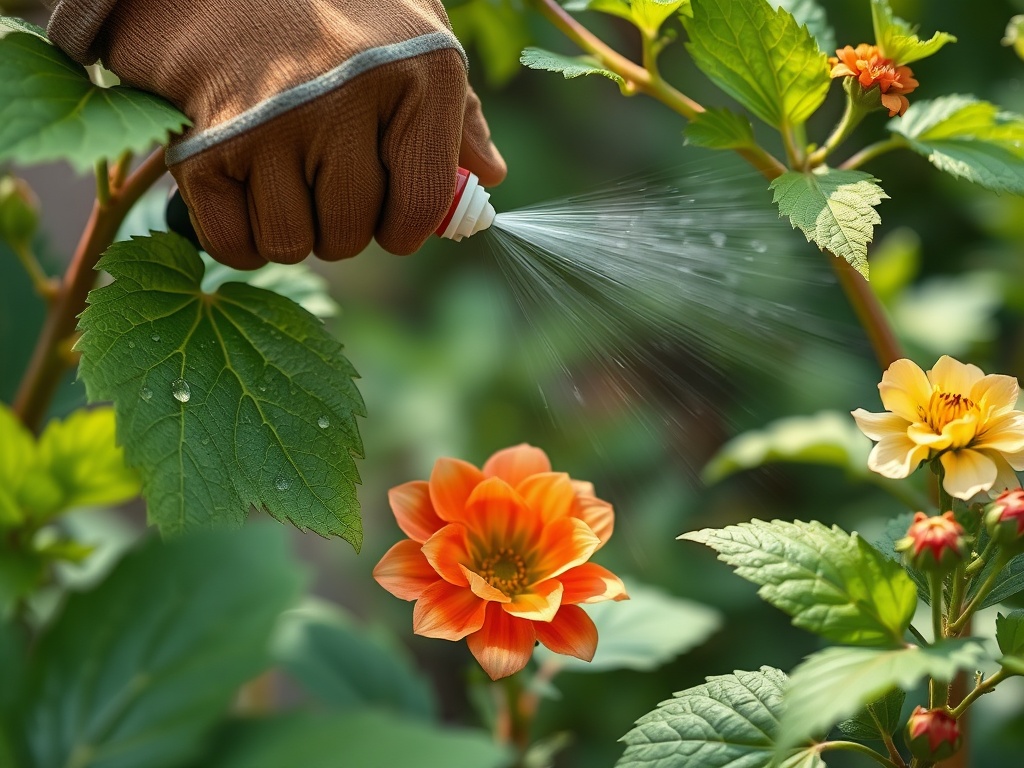
Insecticidal soap is primarily a contact treatment. It needs to wet the target pest to work effectively, which is why coverage matters so much. Soft-bodied arthropods such as aphids, young scales, whiteflies, mealybugs, and spider mites are commonly more susceptible than large, hard-bodied insects.
Because soaps have little meaningful residual activity after drying, they do not provide a long protective barrier. That can be an advantage when you want a targeted treatment, but it also means repeat applications may be needed if new pests hatch or arrive later.
The same contact requirement means spraying the top of leaves while ignoring undersides and stem junctions often gives disappointing results. Pest location should guide application.
How neem products work
Neem-based products are more varied. Neem oil can act in a manner similar to horticultural oil by coating and suffocating certain pests or life stages. Products containing azadirachtin can also affect feeding and insect growth.
NPIC notes that neem components are used in many pesticide products for ornamental plants and crops. That does not mean every neem product is suitable for every edible plant, pest, or growth stage. The formulation and label still control the decision.
Neem is sometimes described online as a harmless “natural” solution. That framing is too broad. Natural origin does not remove the need to consider exposure, plant sensitivity, aquatic effects, pollinators, beneficial insects, and the instructions on the label.
Neem oil vs insecticidal soap side by side
| Factor | Neem-Based Products | Insecticidal Soap |
|---|---|---|
| Main action | Varies by formulation; may include smothering, feeding reduction, or growth disruption | Direct contact action on susceptible soft-bodied pests |
| Residual effect | Varies by active ingredient and product | Generally minimal after drying |
| Coverage needed | Good coverage is important | Direct pest contact is especially important |
| Best-known targets | Varies; often soft-bodied insects, mites, and some labeled disease uses | Aphids, mealybugs, young scales, whiteflies, mites, and similar soft-bodied pests |
| Plant-injury risk | Possible, especially under stressful conditions or on sensitive plants | Possible, especially on sensitive plants or with repeated/high-temperature applications |
| Key buying check | Active ingredient, labeled pest, labeled plant, dilution/application directions | Labeled plant and pest, application directions, plant-sensitivity cautions |
This comparison describes general tendencies, not a guarantee of performance. Products vary, and pest life stage, coverage, temperature, plant health, and repeat timing can change results.
Which option is better for aphids?
Both may be appropriate if the specific product is labeled for aphids on the plant you are treating. Insecticidal soap is often straightforward because aphids are soft-bodied and usually cluster where direct spray coverage is possible.
Neem may also be labeled for aphids, but the exact mode of action depends on the formulation. If only a few shoots are affected, a strong stream of water or pruning a heavily infested tip may reduce the population before any pesticide is needed.
Integrated pest management starts with identification and the least disruptive effective control. Spraying because insects are visible is not the same as determining whether they are causing meaningful damage.
Plant safety matters with both products
Soaps and oils can injure foliage under some conditions. Tender new growth, drought-stressed plants, very hot weather, bright direct sun, or inherently sensitive species may be more vulnerable.
Follow label restrictions about temperature and plant species. When the label permits and sensitivity is uncertain, treating a small inconspicuous area first and observing it before spraying the entire plant can reduce the risk of widespread injury.
Do not assume a stronger mixture works better. Increasing concentration beyond the label can increase plant injury and exposure without improving control.
Protect pollinators and beneficial insects
Contact products can harm non-target organisms if they are sprayed directly. Avoid treating open flowers when bees or other pollinators are actively visiting, unless the label specifically provides a safe and lawful use pattern. Target the pest rather than soaking the entire garden “just in case.”
Beneficial insects such as lady beetles, lacewings, parasitoid wasps, and predatory mites can suppress pest populations. If they are present in useful numbers, broad spraying may interfere with that natural control.
Organic or low-toxicity positioning does not make a pesticide ecologically neutral. Use only what is needed, where it is needed, and when label conditions allow.
A practical decision framework
Choose insecticidal soap when:
- The target is a susceptible soft-bodied pest.
- You can reach the pest directly with spray.
- You prefer a treatment with little residual activity.
- The plant is listed or otherwise permitted on the label.
Choose a neem product when:
- The labeled target and plant match your situation.
- The formulation’s mode of action fits the pest and life stage.
- You can follow the product’s timing, mixing, and environmental precautions.
- You understand whether the product is an oil-based formulation, an azadirachtin product, or another labeled neem derivative.
Choose neither when the insect is harmless, beneficial, misidentified, or below a level that justifies treatment. Physical removal, pruning, water sprays, sanitation, or environmental changes may be enough.
Do not let treatment replace diagnosis
In edible beds, soil and fertility choices also affect plant vigor; a balanced raised bed soil approach is more useful than treating every weak plant as a pesticide problem.
Likewise, not every leaf spot is an insect problem. Fungal or bacterial diseases, nutrient disorders, sunscald, overwatering, and herbicide injury can resemble pest damage. Identify the symptom before choosing a product.
Pick the tool that matches the pest
The neem oil vs insecticidal soap decision is best made after three questions: What pest is present? What plant is being treated? What does the label allow? Insecticidal soap is a direct-contact tool with little residual action, while neem products vary and may combine oil-like contact effects with other biological activity.
Using the correct product at the correct concentration, with careful coverage and attention to non-target organisms, is more important than treating either option as universally “safe” or universally “stronger.”
This article is for general educational purposes and does not constitute professional pest-control, horticultural, medical, veterinary, or legal advice. Pesticide registrations and permitted uses vary by product and jurisdiction. Always read and follow the current product label; the label is the controlling use direction.[/