Dethatching is not routine lawn “cleaning.” It is a corrective practice for lawns with an excessive layer of thatch, and using a power rake or vertical mower on a lawn that does not need it can tear healthy turf, expose soil, and create unnecessary recovery work.
TL;DR: Identify true thatch before renting a machine. A small organic layer can be normal, while excessive buildup can interfere with water, air, and root-zone function. Correct the causes, choose an appropriate season for the grass type, and use core aeration or vertical mowing only when the lawn’s condition supports it.
What thatch is and what it is not
Thatch is the layer of partially decomposed stems, roots, crowns, and other plant material that develops between green grass blades and the soil surface. It is not simply a layer of loose grass clippings.
That distinction matters because one of the most persistent lawn-care myths is that leaving normal mowing clippings automatically creates thatch. Properly sized clippings generally break down quickly. Thatch accumulates when plant material builds faster than soil organisms can decompose it, which can be influenced by grass species, growth rate, soil conditions, fertilization, irrigation, pesticide practices, and compaction.
A modest thatch layer can provide some cushioning and insulation. The problem begins when the layer becomes excessive enough to restrict water movement, keep roots concentrated above the mineral soil, or make the lawn feel unusually spongy.
The University of Minnesota Extension’s guide to thatch control treats vertical mowing as a targeted control method rather than a universal seasonal chore.
Myth 1: Every lawn should be dethatched each year
Annual dethatching is not a general best practice. Mechanical dethatching is disruptive: steel tines or blades cut into the turf and pull material to the surface. If the lawn has little problematic thatch, that disruption can cause more harm than benefit.
Before scheduling the work, cut a small wedge or plug from the lawn and look at the layer between green tissue and soil. Do this in several areas because buildup may be uneven. A spongy feel alone is not enough; saturated soil, loose organic topdressing, or thick turf can also feel soft.
If the layer is thin and water enters the soil normally, focus on routine mowing, irrigation, fertility, and compaction management instead of aggressive dethatching.
Myth 2: Grass clippings are the main cause
Normal clippings contain a high proportion of water and break down relatively quickly when mowing is frequent enough that only a modest portion of the grass blade is removed. Tougher plant tissues such as stems, crowns, and roots contribute more to persistent thatch.
Clippings can become a problem when mowing is delayed so long that heavy mats are left on the lawn. In that case, rake up thick piles that block light and air. That is different from blaming all clippings for a thatch layer below the canopy.
Myth 3: Dethatching and core aeration are the same thing
They solve different problems.
Dethatching or vertical mowing uses blades or tines to cut into the thatch layer and bring material to the surface. It directly removes organic buildup but can be hard on turf.
Core aeration removes plugs of soil and turf. Its primary value is relieving compaction and improving movement of air and water into the root zone. Aeration can also help soil microorganisms interact with the thatch layer, supporting decomposition over time.
Where severe thatch and compaction occur together, a lawn may benefit from aeration as part of the corrective plan rather than treating vertical mowing as the only tool.
Find the reason before removing the symptom
If a lawn repeatedly builds thatch, ask why. Excessive nitrogen can drive lush top growth. Frequent shallow irrigation can keep roots near the surface. Compacted soil can reduce oxygen and biological activity. Some turf species naturally produce more stems and rhizomes than others.
Review the basic maintenance system:
- Is the grass being mowed at an appropriate height for the species?
- Is fertilizer being applied according to soil needs rather than a fixed habit?
- Does irrigation wet the root zone deeply enough without keeping the surface constantly damp?
- Is the soil compacted by foot traffic, pets, vehicles, or heavy equipment?
- Are pesticides being used only when needed and according to the label?
A well-managed lawn also functions as a major visual field in the landscape. If you are adjusting planting beds and hardscape at the same time, the guide to building a cohesive color palette outdoors can help the lawn fit the broader design rather than being treated as an isolated surface.
When dethatching makes sense
Dethatching is most defensible when you have confirmed excessive buildup, the turf is healthy enough to recover, and conditions support active growth afterward. Timing varies by grass type and region, so local extension recommendations should take priority over a generic calendar.
For cool-season lawns, the University of Minnesota advises vertical mowing when grass is actively growing and can recover, rather than during peak summer stress. Warm-season grasses have different growth cycles and may require different timing.
Avoid aggressive work when the lawn is drought-stressed, dormant, newly established, or already weakened by disease or heat. Mechanical removal creates open tissue and exposed soil, so recovery conditions matter.
How to dethatch with less damage
1. Mow and assess the site
Mow the lawn to a normal appropriate height before work so equipment can reach the thatch layer consistently. Mark sprinkler heads, shallow irrigation tubing, landscape lighting wires, invisible-fence components, and any other hidden obstacles.
2. Use the right machine
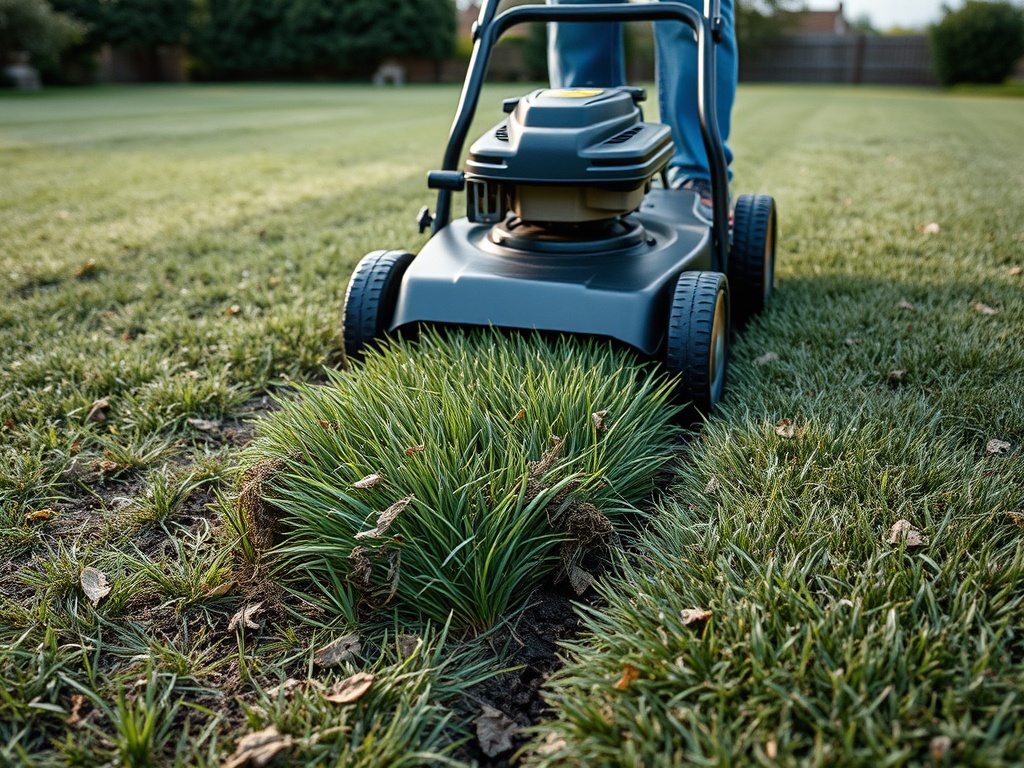
A vertical mower or purpose-built dethatcher is more appropriate than improvised mower attachments. The Extension specifically cautions that some power-rake attachments for rotary mowers may be ineffective and destructive.
3. Set the depth conservatively
The goal is to work through the thatch layer without unnecessarily scalping the lawn or deeply disturbing mineral soil. Equipment differs, so follow the rental company or manufacturer instructions and test a small area first.
4. Remove loosened debris
Mechanical dethatching can bring a surprising volume of material to the surface. Rake or collect it so it does not smother the remaining turf. Healthy, pesticide-free debris may be compostable depending on local rules and disease conditions.
5. Support recovery
After dethatching, address the conditions that caused buildup. Appropriate irrigation and fertility can support regrowth, but avoid reflexively overfertilizing. If the operation exposed thin areas, overseeding may be useful when it fits the grass species and season.
Dethatch only after the lawn gives you a reason
The most useful lawn dethatching guide begins with diagnosis. Confirm thatch, distinguish it from clippings and compaction, choose timing based on grass growth, and use the least disruptive method that solves the actual problem.
Routine lawn care should preserve healthy roots and soil function, not create a yearly cycle of tearing up turf because a machine is available for rent. When seasonal outdoor areas are being refreshed at the same time, maintaining outdoor cushions and fabrics can improve the patio side of the landscape without adding unnecessary stress to the lawn.
This home and garden information is for general educational use and is not a substitute for local turfgrass, pesticide, irrigation, or landscape advice. Grass species, climate, soil, and regulations vary; follow local extension recommendations and all equipment or pesticide labels.[/